Governo dos EUA quer acelerar o desenvolvimento de comunicação veículo-para-veículo
Enviado: 14 Mai 2015, 12:00
The US government wants to speed up deployment of vehicle-to-vehicle communication
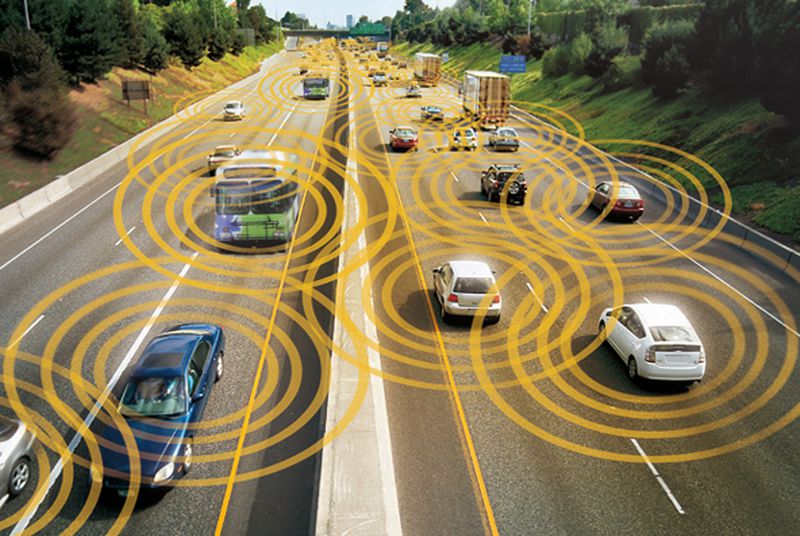
Vehicle-to-vehicle (V2V) communication is one of the next big sea changes to hit the auto industry — within a few years, every new car on the road will be wirelessly talking with every other new car on the road, delivering position and speed information that can help prevent accidents. NHTSA had already committed to delivering a set of proposed rules for V2V by next year, but USDOT secretary Anthony Foxx doesn't think that's fast enough: he's asked the agency to "accelerate the timetable" in comments made this week. Additionally, he says that he's gearing up for "rapid testing" in concert with the FCC to make sure that there are no radio interference issues with V2V systems. (Various industry groups have been concerned that efforts to expand Wi-Fi spectrum in the US could cause issues with V2V.)
Even in its most rudimentary form, V2V can make a huge difference in safety by basically allowing drivers (and self-driving cars) to see things beyond their field of vision. I had a chance to test V2V-equipped cars at CES last year, and was immediately impressed: the system warns you of things like cars at intersections that may not be slowing down for a red light and emergency braking beyond the car ahead of you — scenarios that you'd have no way to detect otherwise before a crash was inevitable.
http://www.theverge.com/2015/5/14/86053 ... deployment
Tradução: O secretário da USDOT, Anthony Foxx, está pressionando a NHTSA para soltar a primeira versão da documentação do primeiro padrão de comunicação entre veículos, ou V2V (Vehicle-to-vehicle). A idéia é que os carros se falem entre si para ver se alguém está cruzando um semáforo vermelho, fazendo uma freada de emergência ou coisa parecida, aumentando a segurança do trânsito. O q ninguém falou é como vai ficar a privacidade nesse caso, já q todos os carros vão ficam emitindo sinais de sua posição, a qto onde, onde vai, etc. Aparentemente esse novo padrão também está enfrentando problemas com a FCC, pois o novo espectro para Wi-Fi dos EUA poderia interferir nesse tipo de comunicação.
Vehicle-to-vehicle (V2V) communication is one of the next big sea changes to hit the auto industry — within a few years, every new car on the road will be wirelessly talking with every other new car on the road, delivering position and speed information that can help prevent accidents. NHTSA had already committed to delivering a set of proposed rules for V2V by next year, but USDOT secretary Anthony Foxx doesn't think that's fast enough: he's asked the agency to "accelerate the timetable" in comments made this week. Additionally, he says that he's gearing up for "rapid testing" in concert with the FCC to make sure that there are no radio interference issues with V2V systems. (Various industry groups have been concerned that efforts to expand Wi-Fi spectrum in the US could cause issues with V2V.)
Even in its most rudimentary form, V2V can make a huge difference in safety by basically allowing drivers (and self-driving cars) to see things beyond their field of vision. I had a chance to test V2V-equipped cars at CES last year, and was immediately impressed: the system warns you of things like cars at intersections that may not be slowing down for a red light and emergency braking beyond the car ahead of you — scenarios that you'd have no way to detect otherwise before a crash was inevitable.
http://www.theverge.com/2015/5/14/86053 ... deployment
Tradução: O secretário da USDOT, Anthony Foxx, está pressionando a NHTSA para soltar a primeira versão da documentação do primeiro padrão de comunicação entre veículos, ou V2V (Vehicle-to-vehicle). A idéia é que os carros se falem entre si para ver se alguém está cruzando um semáforo vermelho, fazendo uma freada de emergência ou coisa parecida, aumentando a segurança do trânsito. O q ninguém falou é como vai ficar a privacidade nesse caso, já q todos os carros vão ficam emitindo sinais de sua posição, a qto onde, onde vai, etc. Aparentemente esse novo padrão também está enfrentando problemas com a FCC, pois o novo espectro para Wi-Fi dos EUA poderia interferir nesse tipo de comunicação.